Bingo Abradoodle: Mobile Bingo
- 4.7
- Rating
- 10.00M
- Installs
- Free
- Price
 Analysis by App-foxy
I usually judge a casual bingo game by a simple question: does it make a short break feel enjoyable without turning that break into work? Bingo Abradoodle: Mobile Bingo makes a convincing case for itself because it keeps the familiar appeal of calling numbers while presenting it as a light, approachable mobile game. I found it easiest to enjoy in small sessions, when I wanted something relaxed rather than a demanding puzzle or a competitive action game.
The game comes from Abradoodle Games - fun bingo games, and it is free to install. Its audience is broad: the age rating is Everyone, it supports devices running Android 6.0 or later, and its popularity is reflected in a 4.7 average from around 197 thousand ratings. That combination tells me this is not trying to be a niche bingo simulation. It is designed as an accessible casual title that can be picked up quickly.
There is also a practical reason to consider it: the game has passed the early-experiment stage. It was released on September 28, 2017, and has reached over 10 million installs. I would not treat popularity as proof that every player will love it, but it does make the game a more reassuring choice than an obscure title with little history. The current version is 4700, which is useful context for anyone deciding whether it is still actively maintained as part of their regular game rotation.
You May Also Like

 Blood Strike: 2.5 Anniversary
Blood Strike’s Loadouts Turn Every Drop Into a Tactical Gamble
A close look at Blood Strike’s custom loadouts: how fast access to signature weapons reshapes its battle royale rhythm, rewards preparation, and narrows the gap between fights.

 Pandora - Music & Podcasts
Pandora’s Music Is Easy to Start, but Harder to Recover
Pandora’s strength is its low-effort path from a seed to a station. Its weak spot is how much confidence it asks you to place in connection, setup, and quiet recovery.

 8 Ball Pool
 Is Built on Rivalries, Rematches, and Routine
A close look at the rivalries, rematches, shared routines, and unanswered safety questions that turn a quick pool match into a persistent mobile community.

 Samsung Music
’s Quiet Strength Is Playing What You Already Own
Its reach comes less from spectacle than from dependable access to a personal library. That simplicity is both the app’s strongest retention engine and its ceiling.

 AccuWeather: Weather Radar
AccuWeather Review: A Quick, Clear Forecast for Everyday Decisions
For everyday plans, the best forecast is the one you can understand quickly. AccuWeather makes rain timing, radar, and local conditions easy to act on, with a few trade-offs.

 Hill Climb Racing
Why Hill Climb Racing Still Turns Crashes Into One More Run
A tiny car, a bumpy hill and one more upgrade: Hill Climb Racing keeps resurfacing because its simple chaos makes every near-miss feel personal.
More From Our News Desk



How I would decide whether it belongs on your phone
My first decision criterion is the kind of attention the game demands. Bingo Abradoodle is best suited to someone who enjoys watching a board develop gradually and making quick checks as numbers are called. It is not the right choice if you want deep strategy, a long story, or constant physical interaction. The pleasure comes from recognition, anticipation, and the small satisfaction of completing a line or card, not from mastering a complicated system.
That makes it a useful option for several everyday situations. I can imagine opening it while waiting for an appointment, taking a few rounds during a quiet lunch, or playing on the sofa when I want entertainment that does not require learning a large set of rules. A casual bingo game also works well for players who may feel excluded by fast reflex games. The basic idea is familiar, so the barrier to entry is low.
Before installing any free game, I also look at how comfortable its business model is likely to be. Bingo Abradoodle includes in-app purchases ranging from $0.99 to $99.99 per item. That does not automatically make the experience poor, but it is an important part of the decision. I would approach it as a free game with optional spending rather than assuming every useful resource will remain entirely outside the purchase system.
My advice is to decide on a personal spending boundary before playing. That is especially sensible in a game built around repeated rounds and gradual progress, because the temptation to make a small purchase can feel more reasonable after several sessions. A clear limit keeps the game in its intended casual role. If you strongly prefer games with no optional purchases at all, a paid bingo title or a very simple offline alternative may suit you better.
The first sessions: familiar rules, mobile rhythm
The strongest part of the concept is its immediate familiarity. You do not need to understand a fictional world, memorize character abilities, or study a tutorial-heavy control scheme before you can appreciate what is happening. The central rhythm is easy to follow: listen for the called number, find it on the card, and keep an eye on the pattern you are trying to complete.
That simplicity is more valuable than it may sound. Many mobile games use casual presentation while hiding a surprisingly demanding progression system underneath. Bingo Abradoodle feels more suitable for players who want a recognizable activity first and a game layer second. I would recommend starting with short sessions rather than trying to make it a long evening activity immediately. That gives you a better sense of whether the repeated calling-and-marking loop feels relaxing or repetitive.
One small habit improves the experience: I try to play when I can give the calls at least moderate attention. Bingo may look ideal for multitasking, but missing a number can undermine the satisfaction of the round. If you are watching a show closely, carrying on a conversation, or moving between several tasks, the game may become more frustrating than calming. It works best as a low-pressure activity, not as background noise that demands no attention whatsoever.
Another useful approach is to treat each round as a contained break. Instead of opening the game with the vague intention of playing indefinitely, I use it as a quick reset between tasks. That prevents the familiar bingo loop from feeling overextended and makes the small wins feel more distinct. For me, this is one of the better ways to get value from a casual game without expecting it to replace a larger hobby.
Where the game earns its place
The clearest strength is accessibility. The Everyone rating and long-running presence on mobile make it an easy recommendation for households where players have different levels of gaming experience. Someone who rarely plays games can understand the basic objective, while a regular casual player can appreciate the convenience of having bingo available without arranging a physical game.
It can also be a pleasant bridge between traditional bingo and mobile entertainment. If you enjoy the anticipation of a number being called but do not want the setup of cards, markers, and a caller, a phone-based version removes much of that preparation. I would not say it replaces the social atmosphere of a room full of people, but it does preserve the individual rhythm of checking a card and waiting for the next call.
The game’s scale matters as well. With over 10 million installs and a 4.7 average, it has clearly found an audience beyond a handful of enthusiasts. I read that as a sign that its basic presentation is doing something right for casual players. Still, I would use those figures as a reason to try it, not as a promise that it will match your personal taste. Bingo is a genre with a very specific pace, and no rating can change that.
One non-obvious advantage is that the straightforward format makes it easier to identify your own tolerance for repetition. In a more complicated game, you might keep playing because you are curious about the next feature or story chapter. Here, the core activity is exposed early. That is useful: within a few sessions, you can make an honest decision about whether the calling rhythm itself is satisfying enough to keep.
I also like the possibility of using it as a gentle introduction to mobile games for a relative or friend. The conversation does not need to begin with controls, inventories, or complex objectives. You can explain the basic bingo idea and let the person explore at their own pace. That makes it more approachable than many alternatives in the casual category, particularly for people who are uncomfortable with games built around rapid taps or unfamiliar terminology.
Where another type of game may fit better
The same simplicity that makes Bingo Abradoodle welcoming can limit its appeal. If you want meaningful strategic choices every few seconds, you may find the experience too passive. Traditional bingo has suspense, but it is not usually a game of elaborate planning. Players looking for word puzzles, match-three challenges, card battles, or logic games will probably get more mental variety elsewhere.
It is also not the best match for someone seeking a genuinely social event. Playing on a phone can recreate the mechanics of bingo, but it does not automatically recreate the jokes, conversation, and shared excitement of a community hall or family gathering. If the social element is the main reason you like bingo, a real-world session or a multiplayer-focused alternative may offer more of what you want.
Compared with a basic offline bingo app, this game may be more appealing if you value a fuller mobile-game presentation and a title with an established audience. The trade-off is that a minimal offline tool can feel more predictable and less exposed to spending prompts. I would choose the simpler alternative for a child’s device with limited supervision, for travel where connectivity is uncertain, or for anyone who wants bingo to behave like a straightforward utility rather than a free-to-play game.
Compared with a paid casual game, Bingo Abradoodle has the obvious advantage of being free to start. A paid alternative may be preferable when you want a clearly defined purchase and no temptation to keep buying individual items. Neither approach is universally better. The free model lowers the entry barrier, while the paid model can make budgeting easier. Your preference here should influence the decision as much as the bingo mechanics themselves.
I would also skip it if you need a game that rewards long-term mastery. Its appeal is more about repeatable comfort than a demanding skill curve. Someone who enjoys improving a personal best, learning complex systems, or discovering new layers over many weeks may feel that the core loop does not give enough room for that kind of progress. In that case, a strategy, puzzle, or deck-building game would likely provide a stronger reason to return.
What to consider before moving from another bingo app
Switching from one bingo game to another is easy in terms of installation, but the real cost is deciding whether the new rhythm suits you. If you already have a bingo app that feels comfortable, start by asking what is missing. Are you looking for a more established title, a different visual style, a more relaxed pace, or simply a free option? Installing this game makes sense when it addresses a specific gap rather than creating another nearly identical icon on your phone.
I would give it a short trial across different situations instead of judging it after one hurried round. Try it during a quiet break, then try it when your attention is divided slightly. This reveals whether the calls are easy for you to follow and whether the game remains enjoyable when you are not fully settled. That test is more useful than assuming a high rating guarantees a perfect fit.
It is also worth checking how the purchase structure feels to you during normal play. Because individual items can cost from $0.99 up to $99.99, I would avoid tapping through purchase screens casually, especially if a younger player will use the device. Enable the device’s purchase safeguards and agree on a limit before handing the phone over. This is not a criticism unique to bingo; it is simply sensible practice for any free casual game that offers optional items.
Players concerned about device compatibility have a clear starting point: Android 6.0 or newer is required. On a supported phone, I would still keep expectations realistic. A compatible operating system means the game can run, not that every older device will feel equally comfortable for extended play. Screen size, battery condition, and general device performance can affect how pleasant any mobile session feels, so a quick test is preferable to assuming your experience will match someone else’s.
The developer name, Abradoodle Games - fun bingo games, also gives the title a focused identity. That can be reassuring if you specifically want bingo rather than a general game collection. On the other hand, players who prefer one app with several unrelated mini-games may find a dedicated bingo title narrower than necessary. I see that focus as a benefit when your goal is clear, but as a limitation when you want variety from a single download.
My recommendation for different kinds of players
I recommend giving Bingo Abradoodle a try if you want a free, familiar casual game that can fill short gaps in the day. It is particularly suitable for players who enjoy the anticipation of number calling, prefer gentle interaction over rapid reflexes, and appreciate a title that can be understood without a long explanation. Its Everyone rating also makes it a reasonable candidate for shared household use, provided adults handle purchase settings responsibly.
I would recommend it less strongly to people who dislike repeated rounds, want a completely purchase-free experience, or expect a deep progression system. For those players, a paid bingo game, an offline-focused option, or a different casual genre may be a better use of storage and attention. The fact that this game is popular does not change the central trade-off: its charm depends on whether you enjoy bingo’s steady pace.
My practical suggestion is to install it with a specific purpose. Use it as a five-minute reset, a gentle introduction to mobile gaming, or a convenient solo version of a familiar pastime. Do not approach it expecting a complex adventure or a social replacement for a real bingo night. That expectation is the difference between a satisfying download and an unnecessary one.
After trying it, keep it only if the basic act of following calls and checking the card still feels pleasant once the novelty fades. That is the honest test. Bingo Abradoodle: Mobile Bingo is strongest as an accessible, low-pressure bingo break, not as an all-purpose game for every kind of player. For me, that focused identity is enough to recommend it to the right audience, especially anyone who wants casual entertainment with familiar rules and a very low barrier to entry.
FAQs for Bingo Abradoodle: Mobile Bingo
01What is Bingo Abradoodle: Mobile Bingo?
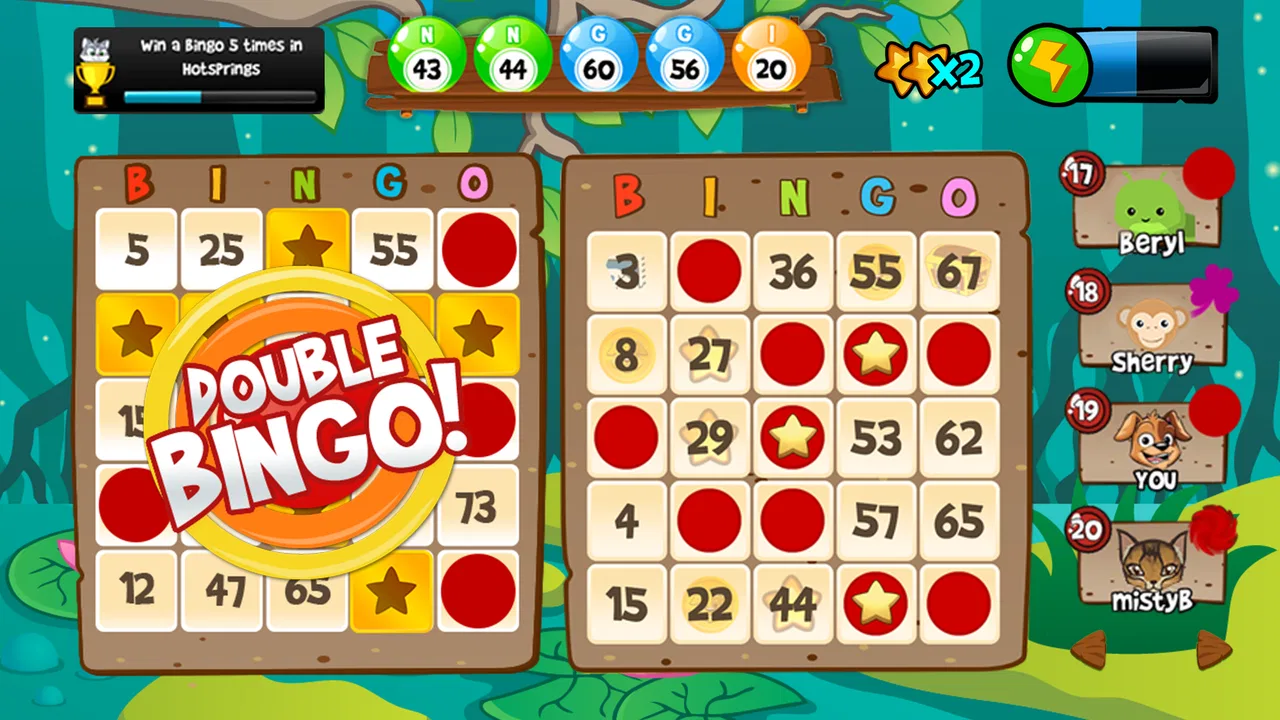
Bingo Abradoodle: Mobile Bingo is a casual bingo game designed for mobile devices. It combines traditional number-matching gameplay with colorful visuals, themed rooms, and progression features intended to keep sessions engaging. Players generally complete bingo cards by marking called numbers, aiming to form the required patterns and earn rewards. The game is best suited to users looking for short, relaxed bingo sessions rather than a complex strategy title.
02Is Bingo Abradoodle: Mobile Bingo free to download and play?
The game can typically be downloaded without an upfront purchase, allowing players to try the main bingo experience at no initial cost. However, free-to-play games may include optional in-app purchases for extra resources, boosts, currency, or other conveniences. Before downloading, it is worth checking the store listing for the current pricing details and reviewing device purchase settings, especially if children may use the same device.
03Does Bingo Abradoodle: Mobile Bingo require an internet connection?
An internet connection may be needed for important features such as loading game content, synchronizing progress, displaying advertisements, processing rewards, and accessing events or other online services. Some parts of a bingo session might work temporarily with limited connectivity, but offline availability can vary by version and device. For the most reliable experience, play over a stable Wi-Fi or mobile-data connection and keep the app updated.
04Is Bingo Abradoodle: Mobile Bingo suitable for children?
The colorful presentation and straightforward bingo mechanics may appeal to younger players, but suitability depends on the age rating, advertising, social features, and available in-app purchases. Parents should review the current store listing and the game’s privacy information before installation. It is also advisable to enable parental controls or require purchase authentication, since free-to-play titles can offer optional paid items during normal gameplay.
05What should I check before downloading Bingo Abradoodle: Mobile Bingo?
Before installing, check that your Android or iOS device meets the required operating-system version and has enough free storage. You should also review permissions, privacy practices, advertisements, in-app purchase options, and recent user feedback. Confirm that the game is available in your region and that its online requirements fit your usage. If preserving progress matters, look for an account or cloud-save option before investing significant time.
Pros
- Bright
- playful artwork makes the bingo experience feel lively.
- Simple controls are easy for casual players to understand.
- Short rounds suit quick gaming sessions on mobile.
- Multiple bingo cards can add variety to each session.
- Relaxing gameplay works well for players of different ages.
Cons
- Frequent rewards may encourage repeated grinding between rounds.
- Small screen elements can be harder to tap on some phones.
- Progress may feel slow without regular play.
- The colorful presentation may not appeal to traditional bingo fans.
- Performance can vary on older devices with limited resources.

Bingo Abradoodle: Mobile Bingo
Gallery